
What on earth is in our sea?
- 19. 8. 2026.
- 09:33
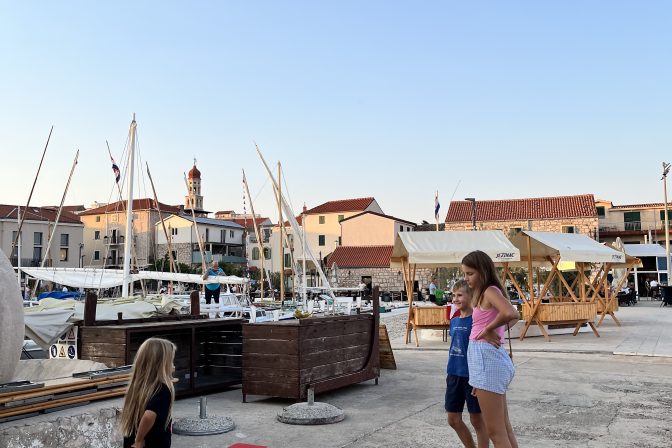
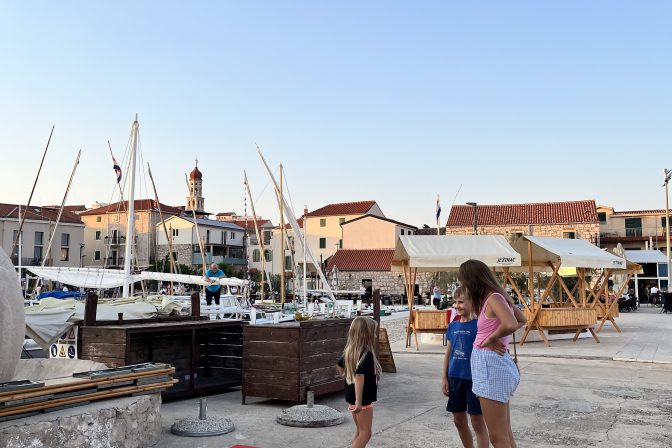
As part of the "Blue Sustainability" project, led by the Betinska Gajeta 1740 Association, an educational and creative workshop for children was held on Saturday, August 15, on the topic of plastic pollution in the sea and its impact on marine life.
Through play, movement, and creative expression, children learned how waste affects the ocean and marine organisms, and what each of us can do to make the ocean cleaner and healthier.
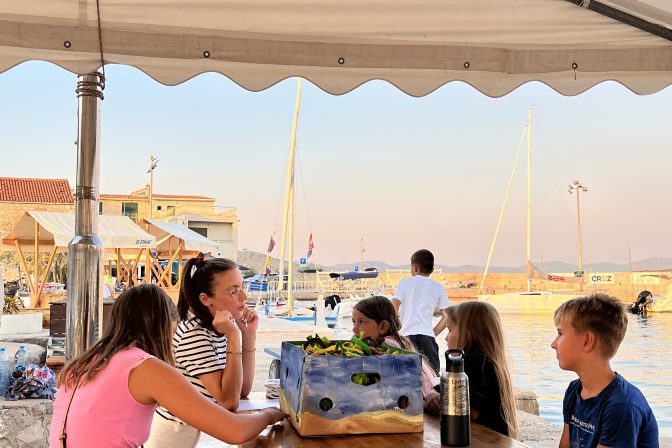
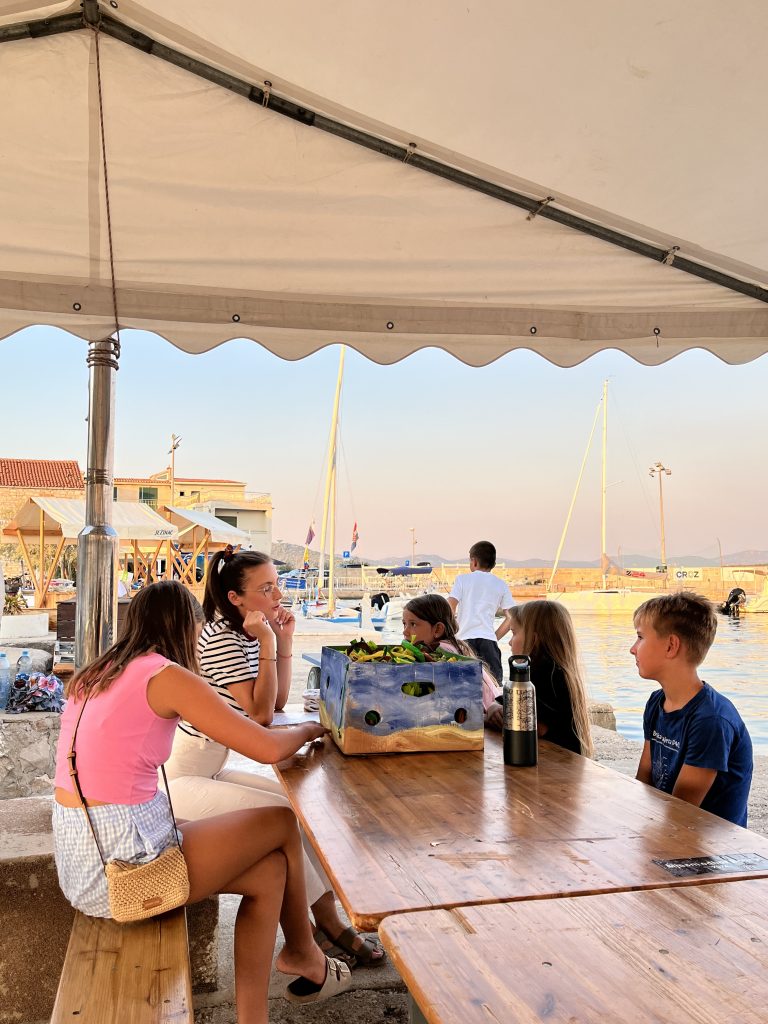
At the beginning of the workshop, the children "fished" from a box that represented the sea. They pulled out various items – a cotton T-shirt, plastic and glass bottles, paper tissues, straws, cups, and other trash. Through conversation, we explored what we can find in the sea, how trash gets there, and why it can be dangerous for fish and other marine animals.
In the second activity, the children tried to guess how long it takes for different types of waste to decompose in nature. By comparing their guesses with the actual data, they discovered that some materials disappear relatively quickly, while plastic can remain in the environment for an extremely long time.
After that, a game of good and bad actions followed. The children had to think carefully about different situations and jump to the side that represented a good or bad action toward the sea and the environment. Is it good to throw trash in the trash can? Should we use a reusable bottle? Is it okay to leave a plastic cup on the beach? Through movement and play, the children learned to recognize behaviors that help, as well as those that harm our sea.
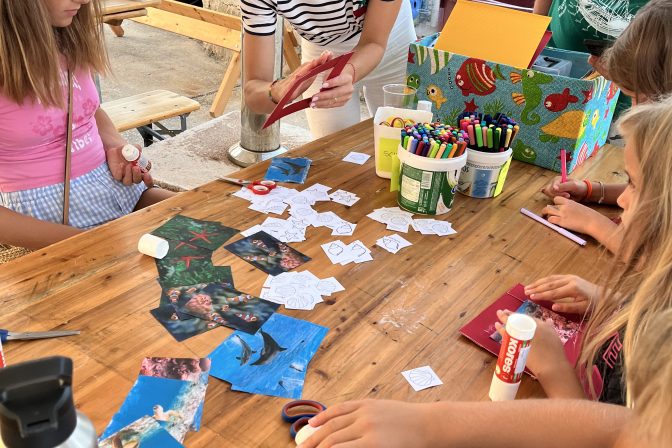
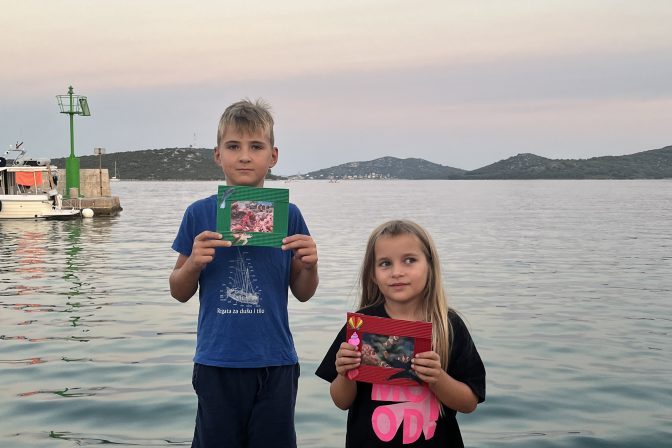
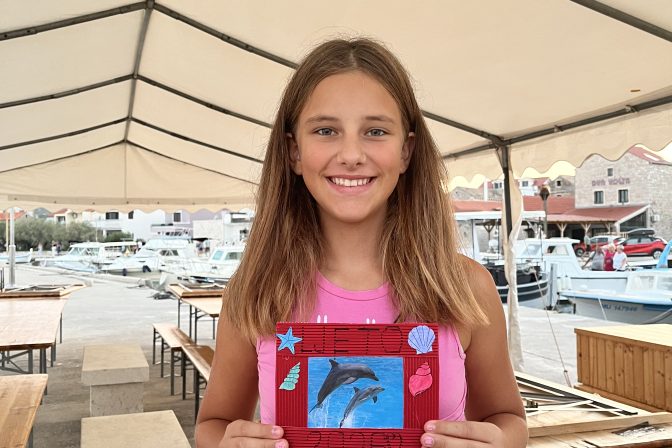
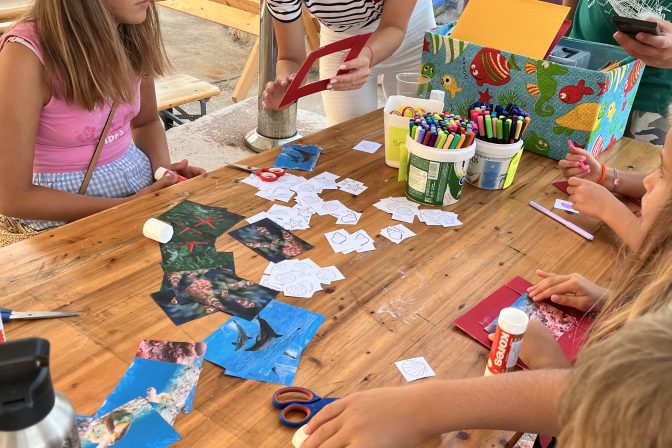
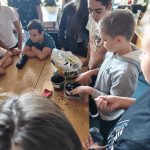
To wrap up, we turned to creative work. Using various recycled materials, the children made their own frames, giving new purpose to items that would otherwise have ended up as trash.
In this way, through four different activities, we combined learning, play, movement, and creativity, and the children developed cooperation, communication, and creative and critical thinking about the environment along the way.
The most important message we wanted to convey is simple:
Every piece of properly disposed waste, every item reused, and every piece of single-use plastic avoided is a small step toward a cleaner sea and a healthier marine world.